 Kept
Zombieing: what it means when someone who ghosted you comes back
Zombieing is when someone who ghosted you suddenly reappears, weeks or months later, acting as if nothing happened. It might be a casual “Hey stranger”, a like on an old photo or a message saying they've been thinking about you. You don't owe them a warm welcome, and you get to decide whether they deserve a second chance.
Where the term comes from
The name builds on ghosting. If ghosting is when someone disappears like a ghost, zombieing is when they rise from the dead: back in your messages as though the silence never happened. It's sometimes called “haunting”, though haunting more often describes someone who watches you online without messaging, which is close to orbiting.
What zombieing looks like
The return is usually casual, as if testing the water. These openers are typical.
- “Hey stranger! Long time no speak. How have you been?” arriving two months after they stopped replying.
- “Just saw something that reminded me of you haha” with no mention of why they vanished.
- “I know I went quiet, things got a bit crazy. Fancy a drink this week?”
- A sudden flurry of likes on your photos, followed a few days later by a message.
Why people come back
There's no single reason, and some are more hopeful than others. Knowing the possibilities can help you decide how to respond.
A genuine return tends to come with some honesty and a willingness to make plans. A low-effort “Hey” at 11pm on a Friday is more likely boredom than a change of heart.
It's worth noticing the timing too. Messages that arrive on holidays, birthdays or late on a weekend night often say more about how the sender is feeling in that moment than about any real plan to reconnect.
- Their other option didn't work out and they're checking who's still around.
- They're bored, lonely or scrolling late at night.
- They genuinely went through something difficult and have only now got their head straight.
- They feel guilty about disappearing and want to smooth things over.
- They realised they liked you more than they thought.
How to decide whether to reply
Give yourself a little time before answering. A message from someone who hurt you can bring back a rush of feeling, and it's better to reply from a calm place than a flattered one. These questions can help you decide.
If your answers lean towards “no”, you're allowed to leave it there. If you're curious, proceed with your eyes open and let their actions, not their words, earn your trust.
- How did I feel when they disappeared, and how long did it take to get over?
- Have they acknowledged the silence, or are they pretending it didn't happen?
- Are they suggesting a real plan, or just chatting?
- Would I be OK if they vanished again?
- Am I interested in them, or in the closure of an explanation?
What to say back
Whatever you decide, a short, calm reply is enough. You don't need to make a speech or pretend you didn't notice the silence.
It's also completely fine to send nothing at all. Someone who disappeared without a word has no claim on a reply. If their messages become pushy after you've said no, blocking is a reasonable next step.
- Open to it, with accountability: “Good to hear from you. You went quiet for a while, so I'd like to know what happened before we pick things up.”
- Open to it, with a plan: “I'm happy to give it another go. Are you free for a coffee on Thursday?”
- Not interested: “Thanks for getting in touch, but I've moved on. Take care.”
- Not interested and want closure: “It hurt when you disappeared, so I'd rather leave it. Wishing you well.”
If you're thinking of reappearing
If you're the one who went quiet and now want to get back in touch, own it. A breezy “Hey stranger” puts the other person in an awkward spot. Something like “I'm sorry I disappeared. I wasn't in a good place, and I handled it badly. I'd love to take you for a drink if you're open to it” gives them something honest to respond to.
Then accept whatever they say. If they're not interested, thank them and leave it there. Our guide on what to say when someone ghosts you can also help you see it from their side.
Dating with clearer endings
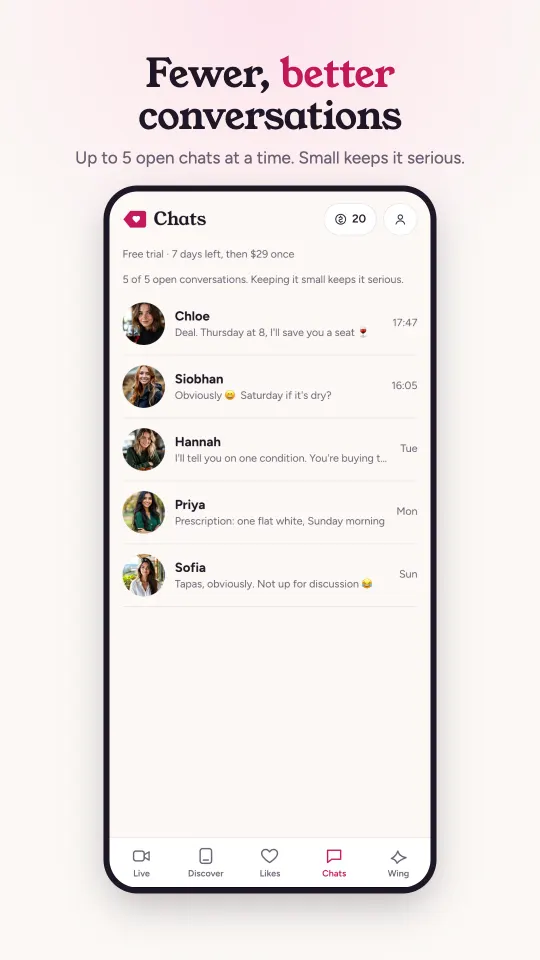
Zombieing feeds on unfinished endings. When chats close clearly, there's less of a half-open door to slip back through. On Kept, closing a chat kindly is built in, and likes resolve to Liked you, Matched, Waiting or Closed, so you know when something has actually ended.
Questions people ask
Should I give someone who zombied me a second chance?
Only if they acknowledge the silence and show real effort, such as a specific plan. A casual “Hey” with no explanation is a weak foundation.
Is zombieing the same as haunting?
They're related. Zombieing usually means coming back with a message; haunting often describes watching someone online without getting in touch.
Do I have to reply to someone who ghosted me?
No. You're free to ignore the message. If you'd like closure, one short, calm reply is plenty.