 Kept
Orbiting: what it means when they ghost you but keep watching
Orbiting is when someone stops talking to you, or never really starts, but keeps watching your stories, liking your posts or following you online. They stay in your orbit without ever coming closer. It can be confusing because it looks like interest, but the absence of actual contact is usually the clearer message.
Where the term comes from
The name is a space image: like a moon circling a planet, the person keeps going round you at a distance, close enough to be seen but never landing. It emerged as social media made it easy to keep watching someone without saying a word. It often follows ghosting, which is why some people call it “ghosting with an audience”.
What orbiting looks like
Orbiting is mostly silent, which is what makes it so easy to overthink. These are typical examples.
- You went on three dates, then they stopped replying. A week later, they're one of the first people to view every story you post.
- Your last message is still unanswered, but they've liked two old photos from your profile.
- They never reply properly, but they react to your stories with an emoji every so often, just enough to remind you they're there.
How to spot orbiting
The key test is simple: are they talking to you? If the answer is no, and they're still watching closely, you're probably being orbited.
- Messages go unanswered or the conversation has completely stopped.
- They regularly view your stories, often soon after you post.
- They like or react to content but never start a real conversation.
- If you ask them something directly, the silence continues.
- They've muted the conversation but not unfollowed you.
Why people orbit, and when it's just shyness
There are plenty of reasons, and most are about them rather than you. Some people are curious, or bored, and scroll without thinking about how it looks. Some want to keep an option open without the effort of a conversation. Some feel guilty about disappearing and watching feels like a halfway house. Occasionally, it's an attempt to stay on your mind so they can return later.
Whatever the reason, a story view is not a message. It costs nothing, and it doesn't count as effort. Try not to read meaning into it.
It's also worth remembering that apps show you views far more than they show you intention. Someone may have your stories near the top of their feed simply because they once interacted with you a lot. Treat a view as information about their scrolling habits, not about their feelings.
Occasionally a quiet watcher really is just shy. Someone who liked you but didn't know how to restart the conversation might hover online, hoping you'll message first. The difference is what happens when you reach out.
If you send a friendly, low-pressure message such as “Hey, saw you're still around. Fancy picking up where we left off?” and they reply warmly and suggest a plan, it was hesitation. If they view the message and go on watching your stories without answering, it's orbiting, and you can let it go.
What to do about it
You have several options, and none of them require a confrontation. Pick whichever helps you move on fastest.
If they reappear later with a “Hey stranger”, you don't owe them a warm welcome. Our guide to zombieing covers how to handle a sudden return.
- Ignore it. The simplest answer is often the best one: let the views be views.
- Send one clear message if you want closure: “I noticed we stopped talking. I'm guessing you're not interested, which is fine. All the best.”
- Restrict who sees your stories using your app's close friends or hide-story settings.
- Mute, unfollow or block if seeing their name keeps pulling you back.
Looking after yourself
Orbiting can keep a door open in your head long after it's closed in reality. It helps to step back from checking who has viewed what. Post for yourself and your friends, not to get a reaction.
If you notice you're doing it to someone else, think about how it might feel on the other side. If you've stepped away, step away properly. A clear goodbye is kinder than watching from a distance; our guide on how to reject someone kindly has wording you can borrow.
Clear endings help
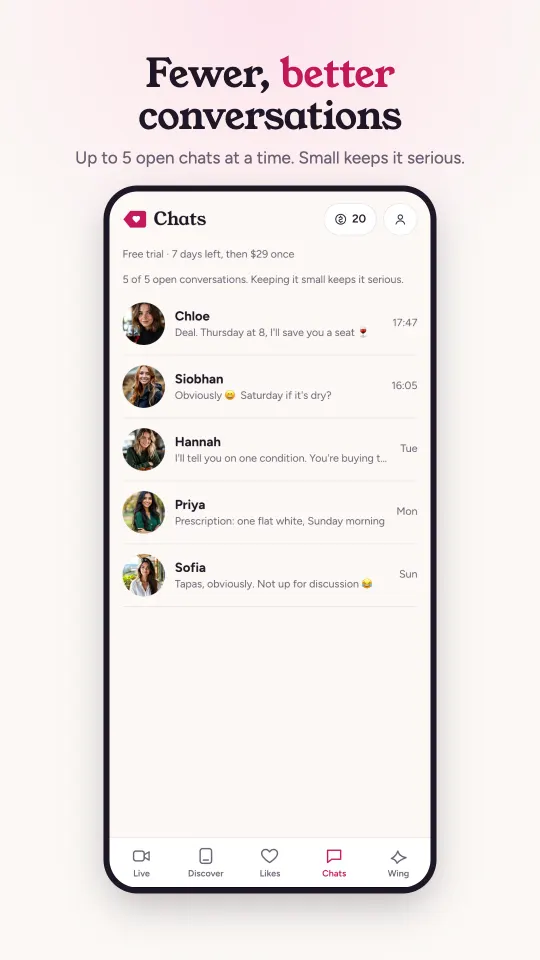
A lot of orbiting starts because conversations end with silence rather than a clear close. On Kept, you can have up to 5 open chats at a time, and closing a chat kindly is built in, so a conversation that's run its course can end clearly instead of drifting into watching.
Questions people ask
Does orbiting mean they still like me?
Not necessarily. Viewing stories takes no effort and can be idle curiosity. If they wanted to talk to you, they would message.
Is orbiting the same as ghosting?
It usually follows ghosting. Ghosting is stopping contact; orbiting is stopping contact while still watching your social media.
Should I block someone who is orbiting me?
If seeing their name upsets you or keeps you hoping, blocking or muting is a perfectly reasonable way to move on.