 Kept
Breadcrumbing: what it means and how to stop waiting
Breadcrumbing is when someone sends you just enough attention, such as the odd flirty text or vague promise, to keep you interested without ever committing to plans or a relationship. It feels like interest, but it rarely leads anywhere. Once you can spot the pattern, you can ask for clarity or step away instead of waiting for the next crumb.
Where the term comes from
The name borrows from the old fairy-tale image of leaving a trail of breadcrumbs. The person breadcrumbing drops small bits of attention, one at a time, so you keep following the trail without ever reaching anything solid.
It became a common dating term alongside other app-era words like ghosting and orbiting. The difference is that a ghost disappears, while a breadcrumber never quite leaves and never quite arrives.
What breadcrumbing looks like in real life
Breadcrumbing is easiest to see in patterns rather than single messages. Any one of these on its own could be innocent. Repeated over weeks, with no real plans, they add up to something.
Here are three situations people describe again and again.
- The late-night ping: you haven't heard from them in a week, then at 11pm you get “Thinking about you x”. You reply warmly. Nothing else follows until the next random evening.
- The plan that never lands: “We should definitely get that drink soon.” You suggest Thursday. They say “Ah, this week's mad, but soon for sure.” Soon never comes.
- The social media nudge: they don't answer your message, but they like your latest photo and reply to your story with a fire reaction, keeping the door just open enough.
How to spot breadcrumbing
Ask yourself one question: is this going anywhere? Real interest usually builds. Breadcrumbing stays at the same low level, or dips and spikes without moving forward. These signs are worth noticing.
- Messages arrive at random times, often when they seem bored or lonely.
- Conversations are mostly one-word replies, memes or reactions rather than questions about you.
- Plans are always vague: “sometime”, “soon”, “when things calm down”.
- They go quiet whenever you suggest something specific.
- They reappear just as you've started to move on.
- You feel anxious waiting for messages more than you feel happy getting them.
- Friends who hear about it say “So… have you actually met?”
Why people breadcrumb
Not every breadcrumber is playing games. Some people enjoy the attention and the ego boost without wanting a relationship. Others are unsure what they want and keep options open. Some are already seeing someone. A few simply don't realise how their mixed signals land.
The reason matters less than the effect. Whatever is going on for them, you're spending time and hope on something that isn't being returned in equal measure. You're allowed to want more than crumbs.
It also helps to notice what breadcrumbing does to you. Waiting for the next message can make you check your phone constantly, replay old chats and second-guess what you said. That anxious, on-hold feeling is a useful signal in itself. Someone who is genuinely interested tends to leave you feeling settled, not unsure where you stand.
What to do if you're being breadcrumbed
The cleanest move is to test the interest with a clear, specific plan. A real offer gets a real answer, and the answer tells you what you need to know.
If they say yes and turn up, brilliant: it may have been nerves or a busy patch. If they dodge again, you've learned that the attention is the point, not you. Our guide on signs someone likes you can help you compare what genuine interest looks like.
- Make a concrete offer: “I'd love to see you. Are you free for a walk on Sunday afternoon?”
- Ask directly: “I enjoy talking to you, but I'm looking for something that goes somewhere. Is that what you want too?”
- Close it kindly: “I've liked chatting, but I want someone who's keen to make plans. All the best.”
- Then mute or archive the chat, so the next crumb doesn't pull you back in.
Making sure you're not the one doing it
It's easy to breadcrumb without meaning to, especially if you're chatting to several people and one has gone a bit flat. If you notice you're only replying to keep someone around, be fair and let them go. A short, honest message, like the ones in our guide to rejecting someone kindly, is kinder than a slow trickle of half-attention.
Dating with fewer mixed signals
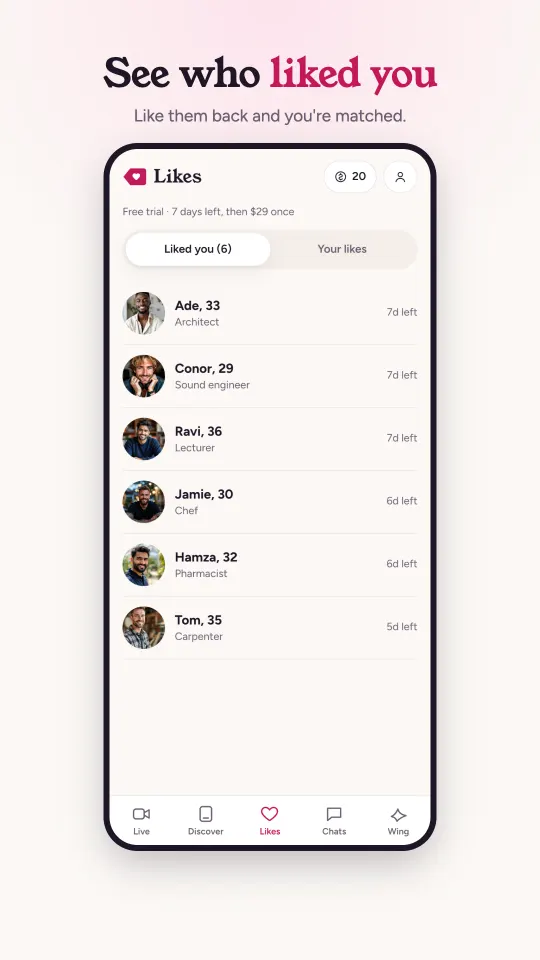
Breadcrumbing thrives when nobody has to say where they stand. Some apps are built to reduce that. On Kept, likes resolve to Liked you, Matched, Waiting or Closed, you can have up to 5 open chats at a time, and closing a chat kindly is built in, so conversations either move towards a date or end clearly rather than lingering.
Questions people ask
Is breadcrumbing the same as ghosting?
No. Ghosting is cutting off contact completely. Breadcrumbing is staying in touch just enough to keep you interested, without ever committing.
Can breadcrumbing turn into a real relationship?
Occasionally, if the person was simply unsure or busy. The quickest way to find out is to suggest a specific plan and see whether they follow through.
Should I block someone who breadcrumbs me?
You don't have to, but muting or archiving the chat helps you move on. Block if their messages keep upsetting you or they ignore a clear request to stop.