 Kept
Situationship: what it means and what to do about it
A situationship is a romantic or physical connection that feels like more than a friendship but has no clear label, commitment or plan. You might see each other often, text daily and act like a couple, yet neither of you has said what it is. Some people are happy that way; it becomes a problem when one person wants more and doesn't feel able to ask.
Where the word comes from
Situationship is a blend of “situation” and “relationship”. It caught on because lots of people found themselves in exactly that grey zone and needed a word for it. It differs from the talking stage, which is an early getting-to-know-you phase. A situationship has usually been going on for a while, with plenty of closeness but no direction.
What a situationship looks like
Situationships come in many shapes. These examples are typical.
- You've been seeing each other for four months. You stay over at weekends, but when a friend asks “Are you two together?”, neither of you knows what to say.
- They text “Miss you” on a Tuesday, then you don't hear from them until Saturday afternoon: “Free tonight?”
- You ask about meeting their friends and they reply “Let's not overthink it, we're having fun.”
Signs you're in a situationship
If several of these sound familiar, you're probably in one. That isn't automatically bad. It just helps to see it clearly.
- You've never talked about being exclusive.
- Plans are mostly last-minute, rarely weeks ahead.
- You haven't met each other's close friends or family, or only by accident.
- Talk of the future is vague or avoided.
- You feel unsure whether you can mention it to people.
- You feel a bit anxious about how often you'll hear from them.
- You hold back what you really want in case it ends things.
Can a situationship work, or become a relationship?
Not every situationship is a problem. If you both genuinely want something light, are honest about seeing other people and neither of you is quietly hoping for more, an unlabelled connection can be fun and low-pressure. Some people choose it on purpose during a busy period at work, while studying or after a long relationship.
The difference is consent and honesty. A situationship works when both people have actually agreed to it. It hurts when one person has drifted into it while wanting a relationship, and stays silent for fear of losing what they have.
Sometimes, yes. A situationship can be a slow start between two people who are cautious after past hurt, or who simply didn't stop to talk about it. The only way to find out is to ask.
If they're clear they don't want more, believe them. Hoping they'll change their mind usually keeps you stuck for longer. If they're unsure, decide how long you're comfortable waiting, and tell yourself the date, not just them.
It's also worth being honest with yourself about why you've stayed. Sometimes a situationship suits you more than you'd like to admit: it's comfortable, it avoids the risk of rejection, and it fills a gap. That's fine, as long as you're choosing it rather than waiting in it. If you notice you feel low after seeing them, or keep hoping the next weekend will change things, that's your cue to have the conversation.
How to talk about it
Pick a calm moment, ideally in person. Keep it short and about you rather than an accusation. Our guide on how to define the relationship goes further. These lines are a good start.
- “I really like what we have, and I've realised I want it to be a proper relationship. How do you feel?”
- “I'm not seeing anyone else and I'd like us to be exclusive. Is that something you want?”
- “I don't want to keep guessing. Can we be honest about what this is for both of us?”
How to leave a situationship
If you want more and they don't, ending things kindly protects your time and your self-respect. You don't need a long speech. Something like: “I've loved spending time with you, but I want a relationship and I don't think that's what you're after. I'm going to step back.”
Afterwards, give yourself some space: mute their stories, avoid “just checking in” messages, and lean on friends. If they reappear weeks later with a casual hello, you don't have to restart things. Our guide to zombieing covers that situation.
Avoiding situationships in the first place
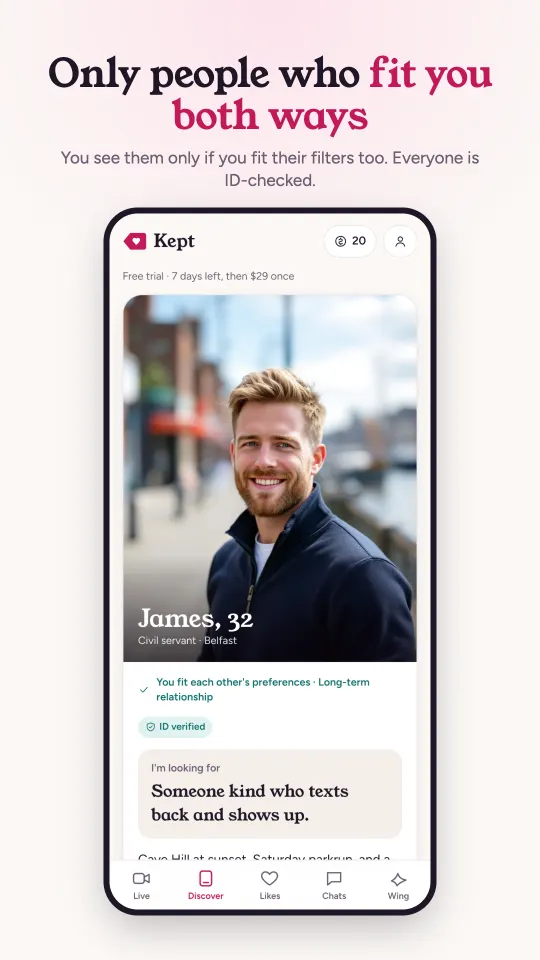
Most situationships start because intentions were never said out loud. Saying what you want early, in your profile and in your first few conversations, filters out a lot of confusion. On Kept, people looking for different things, such as long-term versus casual, aren't matched at all, so you start from the same page.
Questions people ask
How long do situationships last?
It varies from a few weeks to a year or more. The longer one goes on without a conversation, the harder it often feels to raise one, so ask sooner.
Is a situationship the same as friends with benefits?
They overlap, but friends with benefits is usually an agreed arrangement. A situationship is defined by the lack of any agreement.
Is it wrong to want a situationship?
No. It's fine if you both genuinely want something unlabelled. It only becomes unfair when one person is hoping for more and the other knows it.