 Kept
The talking stage: what it means and how to move past it
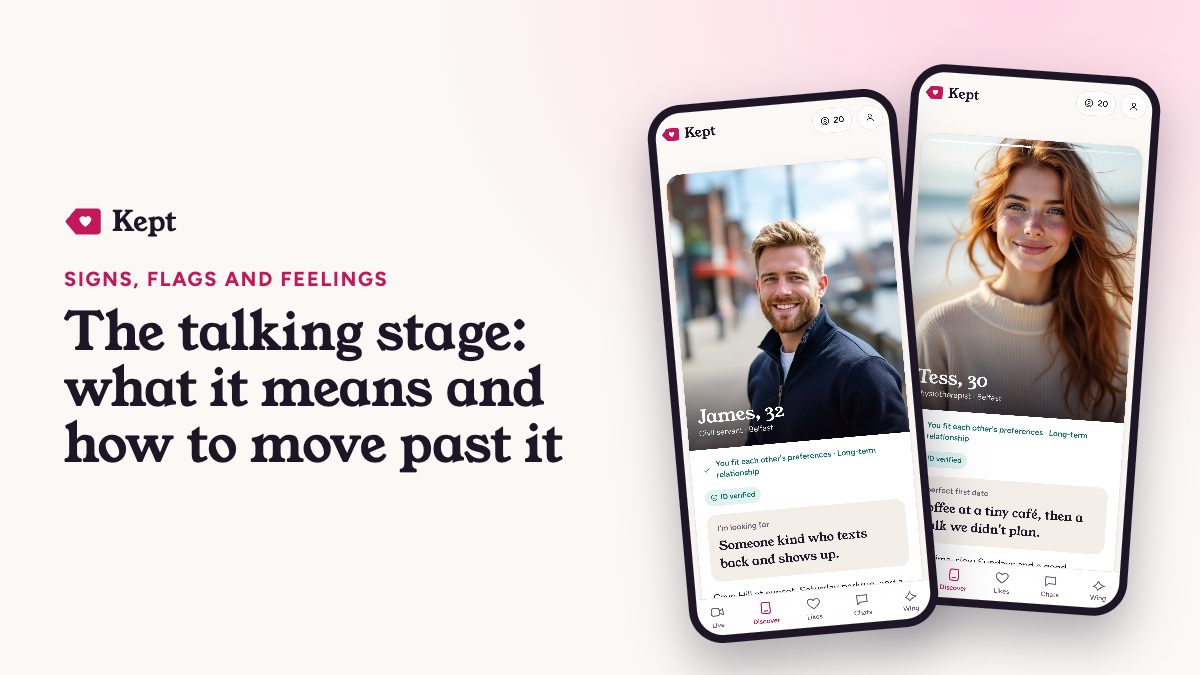
The talking stage is the period when two people are getting to know each other with romantic interest but haven't agreed to be exclusive or call it a relationship. You might be texting daily, calling or going on a few dates. It's normal, but it shouldn't last forever: if it drags on for months with no clarity, it's fair to ask where things are going.
What happens in the talking stage
The talking stage sits between matching or meeting someone and being in a relationship. It's a low-pressure window to find out whether you click before either of you commits.
In practice it might look like this: you match, chat for a week, meet for coffee, then keep messaging between a couple more dates. Neither of you has said “we're exclusive”, and you might both still be talking to other people. That grey area is what the term describes.
- Regular messaging, often daily.
- A few dates, usually low-key.
- Getting a feel for each other's humour, values and lifestyle.
- No agreement yet about exclusivity or labels.
How long should the talking stage last?
There's no fixed rule, but most people want some clarity within a few weeks of regular contact or a handful of dates. Much longer than that, especially without meeting in person, and the talking stage can turn into a holding pattern where one person is far more invested than the other.
If you've been chatting for weeks without meeting, that's the bigger issue. Suggest a plan: “I've enjoyed this. Want to grab a coffee on Saturday?” Meeting tells you more than another fortnight of texts ever will.
Good habits during the talking stage
The talking stage goes better when you treat it as getting to know someone, not as an audition. A few simple habits keep it honest and enjoyable for both of you, and make it much easier to tell whether there's something real there.
- Say what you're looking for early, even in a single line: “I'm dating to find something long-term.”
- Suggest meeting within a week or two of good chat, somewhere public and low-key.
- Keep your own plans and friendships going rather than rearranging your life around someone you've just met.
- Match their effort rather than chasing. If you're always the one starting conversations, notice that.
- Be honest if you're talking to other people and they ask. It's normal at this stage, but lying about it isn't.
- Don't over-read every message. Tone gets lost in text, so save the big questions for a call or a date.
Signs the talking stage is going somewhere
Momentum is the main thing to watch. When it's working, things naturally deepen without either of you forcing it. The usual signs someone likes you apply here too.
- You're making plans more than a few days ahead.
- They introduce you to friends or mention you to family.
- Conversations go beyond small talk to values, hopes and past experiences.
- They're consistent, so you're not left guessing when you'll hear from them.
- They bring up the future, even lightly: “You'll have to meet my sister.”
- They've stopped mentioning other dates or apps.
Signs it's stalling
A talking stage can drift without anyone meaning harm. If someone vanishes completely, that's ghosting, and it says more about them than about you. More often, though, the signs are quieter.
- Messages arrive only late at night, or only when they seem bored.
- Plans are always vague and never happen.
- They go quiet for days, then return as if nothing happened.
- You're always the one starting conversations.
- They avoid any question about what they want.
How to ask what you are
Asking doesn't have to be a big talk. Keep it short, honest and easy to answer. Pick a calm moment, ideally in person or on a call rather than halfway through a busy text thread.
Then listen. If they want the same thing, great. If they're unsure, decide how long you're happy to wait. If they want something different, you've saved yourself months.
- “I'm really enjoying getting to know you. I'm not seeing anyone else. Where are you at?”
- “I'm looking for something serious. Is that what you're after too?”
- “I'd like to see where this goes properly. How would you feel about being exclusive?”
Making the talking stage less confusing
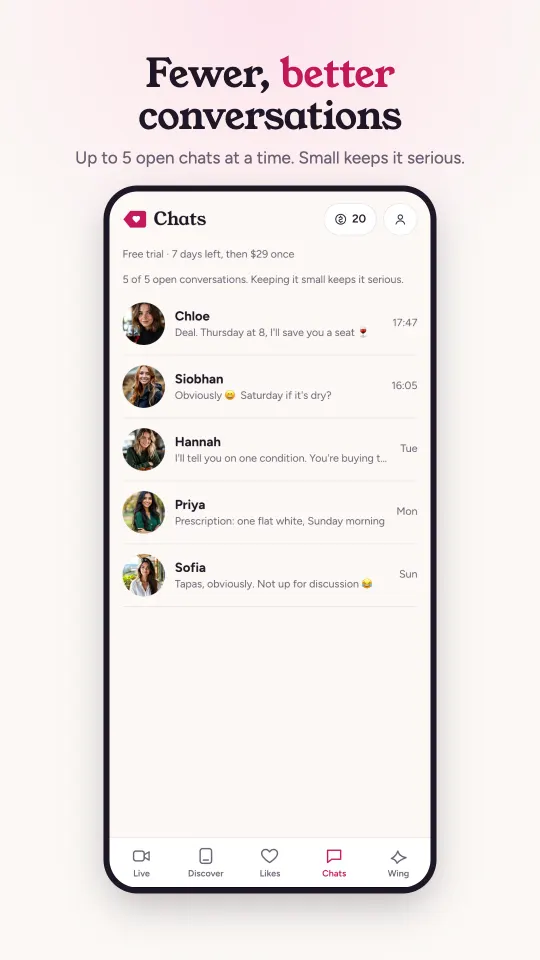
Most talking-stage confusion comes from not knowing what the other person wants. Stating your intentions early, in your profile or first few chats, filters out a lot of mismatches. Kept builds this in: people looking for different things, such as long-term versus casual, aren't matched, and you can have up to 5 open chats at a time, which makes it easier to give each person proper attention.
If you decide it isn't working, end it clearly rather than fading away. Our guide on how to reject someone kindly has short messages you can use.
Questions people ask
Is the talking stage the same as dating?
Not quite. You may be going on dates, but the talking stage usually means you haven't agreed to be exclusive or in a relationship yet.
Is it OK to talk to other people during the talking stage?
Generally yes, unless you've agreed otherwise. If you want exclusivity, say so and ask whether they want the same.
How do you end a talking stage?
Send a short, kind message saying you've enjoyed chatting but don't see it going further. It's clearer and kinder than going quiet.