 Kept
What is ghosting, and how do you deal with it?
Ghosting is when someone you've been talking to or dating suddenly stops all contact without explanation: no reply, no goodbye, sometimes not even an unmatch. It's most common in early dating and online, where there are few shared friends to answer to. It hurts, but it usually says more about the other person's avoidance than about your worth.
What ghosting looks like
Ghosting can happen after one message or after several months. The common thread is that one person withdraws completely and leaves the other to work out what happened.
One exception is worth knowing: if someone goes silent straight after you refuse to send money or move off the app, that isn't ghosting so much as a scammer giving up. Our guide to dating app red flags explains the pattern.
- A lively chat that stops mid-conversation and never restarts.
- A good first date followed by total silence.
- Messages that are delivered and read, but never answered.
- Being unmatched or blocked without a word.
Ghosting's close relatives
Several related behaviours have their own names. Knowing them helps you spot a pattern sooner and stop waiting.
- Breadcrumbing: occasional flirty messages that keep you interested without ever leading to plans.
- Orbiting: they stop replying but keep watching your stories or liking your posts.
- Zombieing: they reappear weeks later as if nothing happened.
- The slow fade: replies get shorter and further apart until they stop altogether.
Why people ghost
Most people who ghost aren't trying to be cruel. They're avoiding an awkward conversation, and silence feels easier in the moment.
That last reason in the list below matters. Going silent on someone who has been rude, pushy or threatening is self-protection, not bad manners.
- They don't know how to say they're not interested without hurting you.
- They've met someone else and feel awkward explaining.
- Something in their life has taken over, such as work, family or their mental health.
- They were never fully invested and simply drifted.
- They felt uncomfortable or unsafe, in which case silence may be the right choice for them.
How to cope when you've been ghosted
The silence is the hardest part, because your mind fills it with reasons. Try not to let it.
You can send one closing message if it helps you, then let it go. Something like: “Hey, I haven't heard back, so I'll assume you're not feeling it. All the best.” It's dignified and gives you closure on your own terms. Don't send a string of follow-ups; you deserve someone who replies.
- Remind yourself that their silence reflects their choices, not your value.
- Talk it over with a friend rather than rereading old messages.
- Mute or archive the chat so it isn't staring at you.
- Take a short break from apps if you need one, then start fresh.
- Notice what you'd like to be different next time, such as meeting sooner or asking about intentions earlier.
What to do if a ghost comes back
Sometimes the person who vanished reappears weeks later with a casual “Hey stranger” as if nothing happened. You don't owe them an enthusiastic welcome. Think about whether you'd actually like to see them again, and how you'd feel if they disappeared a second time.
If you're open to it, it's fair to ask for a little accountability before picking things back up. If you're not, a short reply or no reply at all is fine.
- Open to it: “Good to hear from you. You went quiet for a while, so I'd like to know what happened before we pick this up.”
- Not interested: “Thanks for getting in touch, but I've moved on. Take care.”
- Not sure: give it a day before replying, so you answer from a calm place rather than a flattered one.
What to send instead of ghosting someone
If you're the one who wants out, a short message takes less than a minute and spares the other person days of wondering. You don't need to give a detailed reason. Our guide on how to reject someone kindly has more examples for different situations.
- After a few messages: “I've enjoyed chatting, but I don't think we're a match. Good luck out there.”
- After one date: “Thanks for Saturday. I had a nice time, but I didn't feel a romantic spark. Wishing you the best.”
- After a few dates: “I've enjoyed getting to know you, but I don't see this going where you'd want it to. I wanted to tell you honestly.”
Dating with less ghosting
You can't control other people, but you can choose habits that make ghosting less likely. Keep fewer conversations going at once, so each gets real attention. Move towards a plan to meet rather than chatting for weeks; our talking stage guide explains why momentum matters.
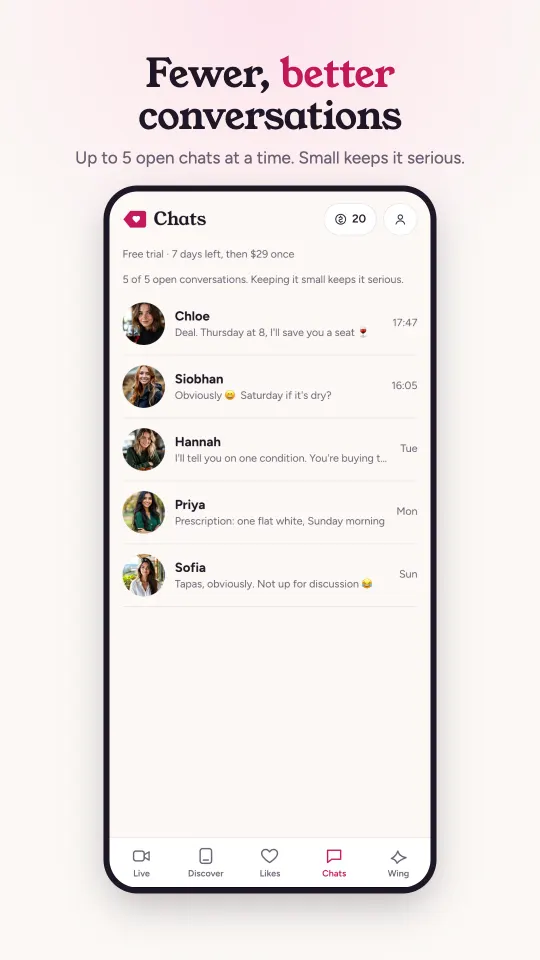
Some apps are designed around this. On Kept you can have up to 5 open chats at a time, closing a chat kindly is built in, and likes resolve to Liked you, Matched, Waiting or Closed, with no named rejections, so you aren't left waiting on someone who has quietly moved on.
Questions people ask
Is ghosting ever OK?
Yes, if you feel unsafe or the other person has been abusive, pushy or disrespectful. In those cases, blocking without explanation is a reasonable way to protect yourself.
How long before it counts as ghosting?
There's no exact rule, but if someone you've been talking to regularly goes silent for a week or more after you've messaged, it's fair to treat it as ghosting.
Should I message someone who ghosted me?
One short, calm closing message is fine if it helps you. After that, stop reaching out and put your energy into people who respond.