 Kept
Slow fading: what it means when someone gradually pulls away
Slow fading is when someone ends things by gradually reducing contact instead of saying it's over: replies get shorter and slower, plans dry up, and eventually the conversation stops. It's a softer, longer version of ghosting. Because it happens bit by bit, it can take weeks to realise it's happening, and that uncertainty is often the hardest part.
Where the term comes from
The phrase borrows from film and music, where a scene or song “fades out” slowly rather than stopping dead. In dating it describes the same idea: no clear ending, just less and less until there's nothing left.
It sits alongside ghosting, where contact stops suddenly, and breadcrumbing, where contact continues at a trickle. A slow fade usually moves from one towards the other: it starts as normal chat, thins into crumbs and ends in silence.
What a slow fade looks like
Slow fades follow a familiar arc. Here's how it often plays out over a few weeks.
- Week one: long, chatty messages, questions about your day, a plan for a second date.
- Week two: replies take hours instead of minutes. “Haha yeah” and “Sounds good” replace proper answers. They don't ask you anything back.
- Week three: you suggest meeting and get “Maybe next week? Bit hectic at the moment.” Next week never gets a date.
- Week four: your last message has been read but not answered for five days.
How to spot it early
Everyone has busy weeks, so one slow reply means nothing. A slow fade is a steady trend in one direction. Watch for several of these at once.
- Their messages get shorter while yours stay the same length.
- They've stopped asking questions about you.
- They no longer start conversations; you always message first.
- Plans become vague, then disappear.
- Their tone is polite but flat, with fewer jokes, nicknames or kisses at the end.
- They're active online but slow to reply to you.
- You find yourself writing and deleting messages, worried about seeming too keen.
Slow fade or just a busy patch?
Life genuinely does get in the way. Work deadlines, family illness, exams and low moods can all make someone quieter for a while. The difference is that a busy person who's still interested usually tells you. They'll say “Sorry, work is chaos this week, but I'd love to see you on Saturday” and then follow through.
A slow fade rarely comes with an explanation or a counter-offer. If you're getting less contact and no reason, and no alternative plan, it's reasonable to assume they're losing interest.
It can also help to look at how they behave when you step back. If you stop messaging for a few days and they reach out with something warm and specific, they were probably just stretched. If the silence simply continues, the fade was the answer.
What to say if you think it's happening
You can let the fade finish on its own, but many people find it easier to get a clear answer and move on. Keep it light, short and easy to reply to. Asking doesn't make you needy; it saves both of you time.
Whatever the reply, or lack of one, you've done your part. If they come back keen, great. If not, you can mute the chat and put your energy elsewhere.
- Gentle check-in: “I've noticed things have gone a bit quiet. Still keen to meet up, or not really feeling it? Either is fine.”
- Specific offer: “I'd love to see you again. Free for a walk on Sunday?”
- Graceful close: “Seems like we've both got busy. I enjoyed chatting, so all the best.”
If you're the one fading
It's tempting to fade because it feels gentler than rejecting someone. In practice it often hurts more, because the other person spends weeks wondering what went wrong. A short, clear message is kinder and quicker. Our guide to how to reject someone kindly has wording for every stage, from a few messages in to several dates.
Something as simple as “I've enjoyed getting to know you, but I don't feel a romantic connection. Wishing you the best” takes thirty seconds and gives the other person the clarity a fade never does. If you're feeling overwhelmed by dating in general, it's also fine to say so and take a break, rather than letting several conversations drift at once.
Fewer fades, clearer endings
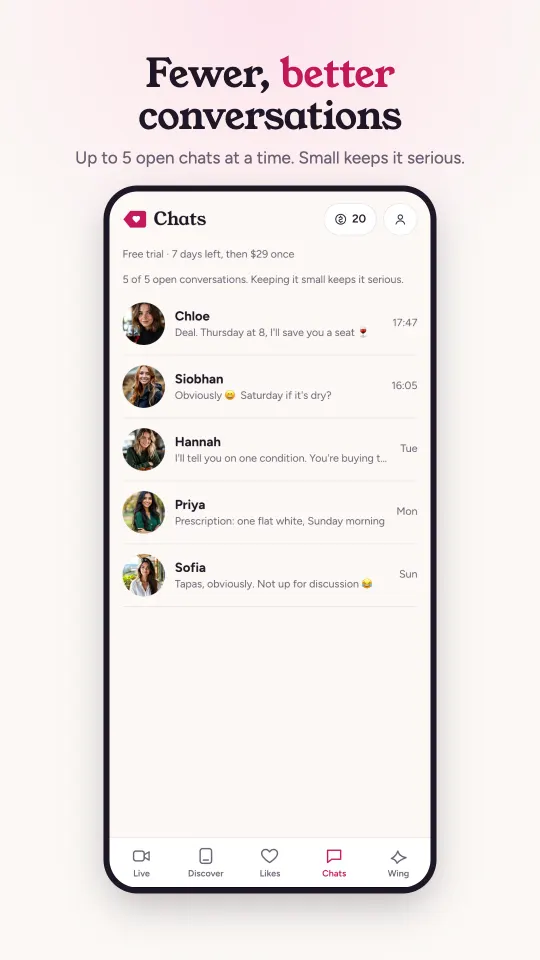
Slow fades are more common when people are juggling lots of conversations and none feels important. Keeping fewer chats going helps. On Kept you can have up to 5 open chats at a time, and closing a chat kindly is built in, so when something isn't working it can end clearly instead of fading out over a month.
Questions people ask
Is a slow fade better than ghosting?
Not really. It can feel gentler to the person doing it, but it often leaves the other person confused for longer. A short, honest message is kinder than either.
How long does a slow fade usually take?
It might take a couple of weeks or a couple of months. The tell is a steady drop in effort with no explanation.
Should I call out a slow fade?
You don't need to call it out. A calm question or a specific plan will usually get you an answer, either in words or in silence.