 Kept
Double texting: when it's okay and when to stop
Double texting means sending a second message before the other person has replied to your first. It's often completely fine: a follow-up after a day or two, or a quick extra thought, is normal. It becomes a problem only when it turns into a string of unanswered messages or pressure to reply.
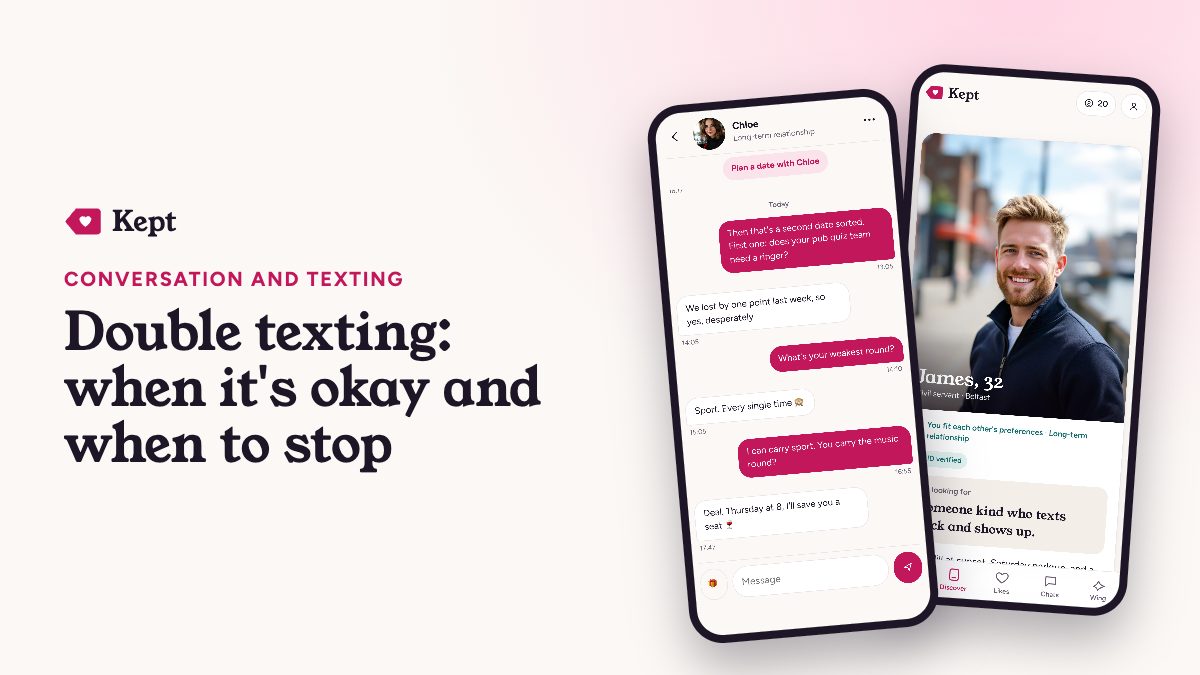
What double texting actually means
The term covers any time you send a message and then another before getting a response. That could be two texts a minute apart because you thought of something funny, or a follow-up two days later after hearing nothing.
The worry around it comes from dating rules that treat any sign of interest as a mistake. In reality, people who like each other double text all the time. Context matters far more than the number of bubbles on the screen.
When double texting is completely fine
In each of these cases, the second message adds something. It's a new thought, a small gift of attention or a practical check, rather than a request to be noticed. That's the simplest test: if your follow-up would be pleasant to receive on its own, it's probably fine to send.
- You thought of something else to add a few minutes later.
- You're sharing something that made you think of them, like a song, a photo of a dog or a funny sign.
- You asked a question, they went quiet for a couple of days, and you send one light follow-up.
- You've been chatting happily for weeks and it's normal for you both to send several messages in a row.
- You're confirming practical details, like the time or place of a date.
Good double texts to send
A good follow-up is light, doesn't mention the silence in a guilt-inducing way and gives them something easy to reply to.
Notice what these have in common. None of them asks why the other person hasn't replied, and each one is easy to answer in a few words. That makes it simple for a busy person to jump back in without feeling guilty.
- “Also, I forgot to ask: did you ever try that ramen place?”
- “Just walked past the best-named café ever and thought of you.”
- “No pressure if you're busy, just wanted to say hi again.”
- “Hope your week's going well. Still up for that walk on Sunday?”
- “Random question that's been bugging me: cats or dogs?”
- “How did the big presentation go?”
When it's time to stop
If you've sent a follow-up and there's still no reply after a few days, that's a sign to pause. Sending a third, fourth or fifth message rarely changes the outcome and can make the other person feel pressured.
It's also worth stopping if your messages start to sound frustrated. Texts like “Guess you're too busy for me” or “??” put the other person on the defensive and usually end the chat rather than revive it.
A good rule of thumb is one follow-up, then silence. If they want to talk, they now have two easy ways back into the conversation.
- Avoid: “Hello??”
- Avoid: “Did I say something wrong?” after a few hours.
- Avoid: several messages in a row, each a little more anxious.
- Avoid: messaging on another platform because they haven't replied on this one.
How to handle the urge to double text
Waiting for a reply can be uncomfortable, especially if you really like someone. A few things help.
First, remember that a slow reply is usually about the other person's day, not about you. Second, put your phone away and do something else for a while. Third, ask yourself what you're hoping the second message will achieve. If the honest answer is “reassurance”, it might be better to wait.
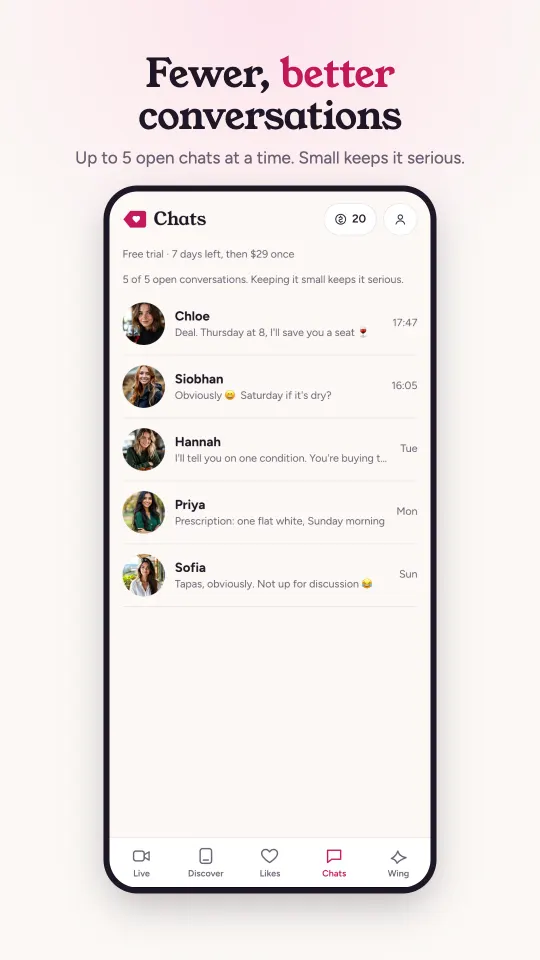
Keeping your options open can also take the pressure off. On Kept you can have up to five open chats at a time, so one quiet conversation doesn't have to dominate your thoughts.
What their silence might mean
There are lots of ordinary reasons people go quiet: work, family, being away from their phone, feeling overwhelmed by messages or simply not knowing what to say. Sometimes it does mean they've lost interest.
If someone goes silent for good, that's ghosting. It isn't kind, but it's still an answer. Our guide on what is ghosting explains more, and what to say when someone ghosts you gives you messages for closing the loop with dignity. If the chat is still alive but slow, try the ideas in how to keep a conversation going.
If you're the one receiving double texts
If someone sends you a second message and you're interested, a quick reply is kind, even if it's just “Sorry, mad week! Yes, still up for Sunday.” If you're not interested, a short honest message is better than leaving them guessing.
On Kept, you can close a chat kindly instead of letting it fade out, which saves both of you from wondering.
Questions people ask
Is double texting a bad thing?
No. One follow-up or an extra thought is normal. It only becomes a problem when it turns into repeated unanswered messages or pressure.
How long should I wait before double texting?
For a follow-up to an unanswered message, a couple of days is reasonable. For an extra thought during an active chat, there's no need to wait.
Does double texting make you look desperate?
Not on its own. A relaxed, friendly follow-up comes across as confident. Anxious or guilt-tripping messages are what put people off.