 Kept
Catfishing: what it means and how to protect yourself
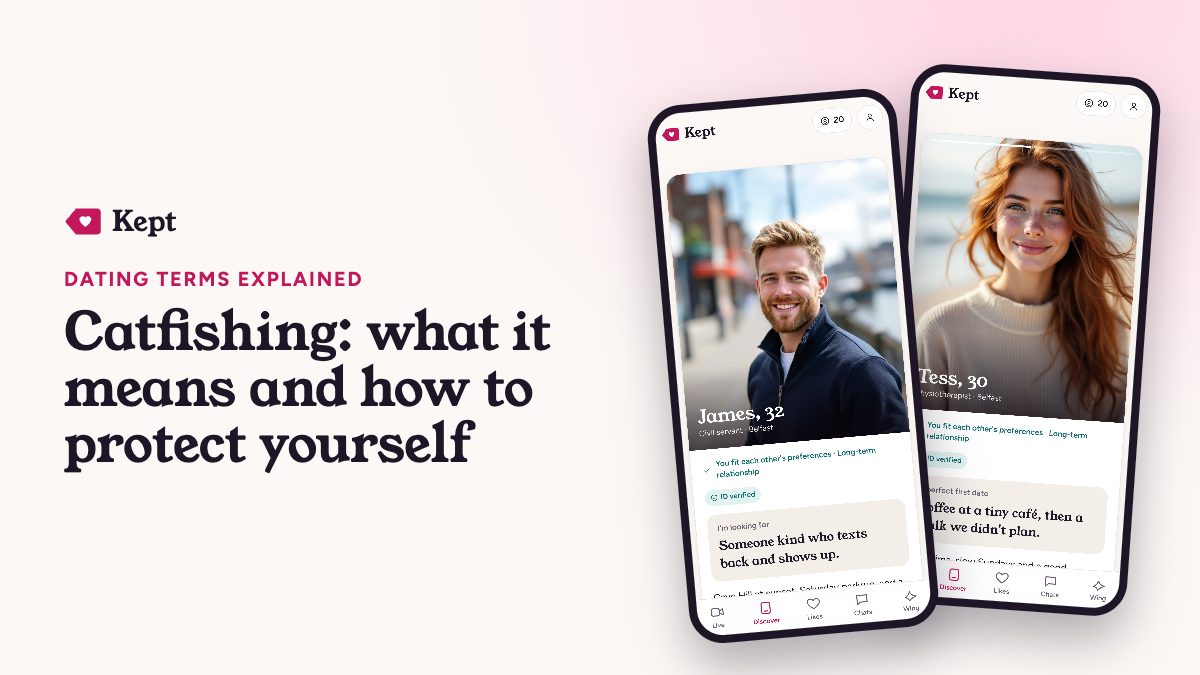
Catfishing is when someone creates a fake online identity, using someone else's photos or an invented life story, to start a relationship with you. Some do it for attention or out of insecurity; others do it to scam people out of money. The safest rule is to verify that someone is real, ideally on a video call, before you get emotionally invested, and never send money to anyone you haven't met.
Where the term comes from
The term comes from the 2010 documentary Catfish, which followed a man who discovered that the woman he had fallen for online wasn't who she said she was. The film later inspired a television series of the same name. In the documentary, the title refers to a story about catfish being put in tanks with other fish to keep them active, an idea used to describe people who keep others on their toes.
Since then, “catfish” has become the everyday word for anyone pretending to be someone else online, from a profile using borrowed photos to an organised romance scammer.
What catfishing looks like
Catfish often seem too good to be true, and they're usually very good at seeming keen. These patterns are common.
- A match with model-quality photos messages you constantly and says “I've never connected with anyone like this” within days, but their camera is always broken when you suggest a video call.
- They agree to meet, then cancel at the last minute every time: a family emergency, a work trip, a car breakdown.
- After weeks of chatting they mention a sudden crisis: “I'm stuck abroad and my bank card has been blocked. Could you help me with a transfer? I'll pay you back.”
How to spot a catfish
No single sign is proof, but several together are a strong warning. Our full guide on how to spot a catfish goes into more detail.
Trust your gut too. If something feels off, even if you can't say exactly what, it's fine to slow down, ask more questions or step away. A genuine match will understand a request to verify; someone with something to hide will usually push back, change the subject or try to make you feel guilty for asking.
- They refuse or keep postponing video calls, or the video is always too dark or glitchy to see them.
- Their photos look professional, or there are only a few of them, all very similar.
- Their story doesn't add up: details about their job, age or location change.
- They push to move the chat off the dating app quickly.
- They declare strong feelings very fast.
- They avoid meeting in person, always with a reason.
- They bring up money, gifts, investments or emergencies, however gently.
Simple checks you can do
You can verify most people in a few minutes without being rude. Real people rarely mind; a catfish will often go quiet.
- Run a reverse image search on their photos to see whether the same pictures appear under other names.
- Suggest a short video call before you meet: “I like to do a quick video chat before a first date. Free for ten minutes tonight?”
- Ask for something specific and spontaneous, like a photo of them holding up a peace sign or doing a thumbs up.
- Search their name and any details they've given you, such as their workplace.
- Keep the conversation on the dating app, where you can report them if something goes wrong.
What to do if you think you've been catfished
First, stop sharing personal information and don't send any money, gift cards or crypto, whatever the story. Take screenshots of their profile and messages, then report and block them on the app where you met.
If you've already lost money or think you've been targeted by a scam, report it to Action Fraud on 0300 123 2040 in the UK, and contact your bank straight away. If you ever feel in immediate danger, call 999. Our guide to romance scam warning signs explains the most common scripts.
Remember that being catfished isn't a sign you were foolish. These people are practised at building trust, and many are part of organised groups. Talk to a friend you trust; it helps to have someone in your corner.
Dating where people are who they say they are
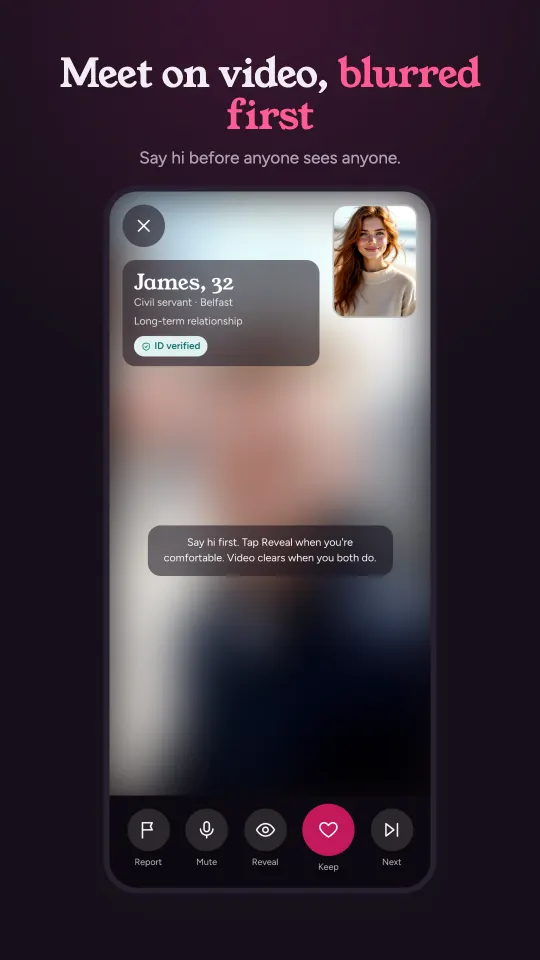
The easiest way to avoid catfish is to use apps that check identities up front. On Kept, everyone passes an ID check, a photo of an ID document plus a selfie, before they can match, and first meets happen on Live video that starts blurred and clears only when you both tap Reveal. You can also block or report from a profile, a chat or during a Live call.
Questions people ask
Is catfishing illegal?
Pretending to be someone else online isn't always a crime on its own, but using a fake identity to get money is fraud. In the UK, report it to Action Fraud on 0300 123 2040.
Why do people catfish?
Reasons range from loneliness and low self-esteem to revenge and, most often when money is involved, deliberate scams.
How can I tell if a dating profile is fake quickly?
Run a reverse image search on their photos and ask for a short video call. Most fake profiles fail one of those two checks.