 Kept
The best dating apps for serious relationships, and how to choose one
The best dating app for a serious relationship is one where people say what they want, prove they are who they claim to be, and are nudged towards actually meeting rather than endless swiping. No single app suits everyone, so this guide gives you clear tests to judge any app by, a fair look at how the well-known apps are designed, and an honest note on our own app.
Seven tests for an app that suits serious dating
Ignore the marketing for a moment and look at how the app actually works. The design decides who you meet and how they behave far more than any slogan does. Run every app you are considering through these questions.
- Intentions: can people say whether they want something long-term, and does the app do anything with that answer, or is it just a line on a profile that everyone skims past?
- Verification: is there a photo or ID check, and is it required or optional? An optional badge tells you less than a check everyone has to pass.
- Profiles with substance: are there prompts, questions or space to write, or is it mostly photos? You can't judge compatibility from six pictures.
- Pace: does the app limit how many conversations you juggle, or does it reward collecting matches you never speak to?
- Pricing you understand: do you know exactly what you are paying, whether it renews and what is locked behind extra tiers?
- Safety tools: can you block and report easily, and does a person review reports?
- Easy to leave: a good app for something serious should be happy for you to delete it once you've met someone.
How the well-known apps are designed
Most people try more than one app, and each of the big names has a recognisable approach. These descriptions stick to well-known, long-standing features rather than claims about numbers or rankings, because those change and are hard to check. Features also get updated, so look at the current version before you decide.
- Hinge is built around prompts: you answer short questions on your profile, and people can like or comment on a specific photo or answer. That gives you something real to open with.
- Bumble built its name on women sending the first message in matches between men and women, which some people find calmer.
- Tinder popularised swiping and is used for everything from casual to serious, so you will need to be clear about what you want.
- OkCupid is known for its detailed questions, which let you see where you and a match agree or differ on things that matter to you.
- eharmony is known for a long compatibility questionnaire at sign-up, which suits people who like structure.
Where our app fits
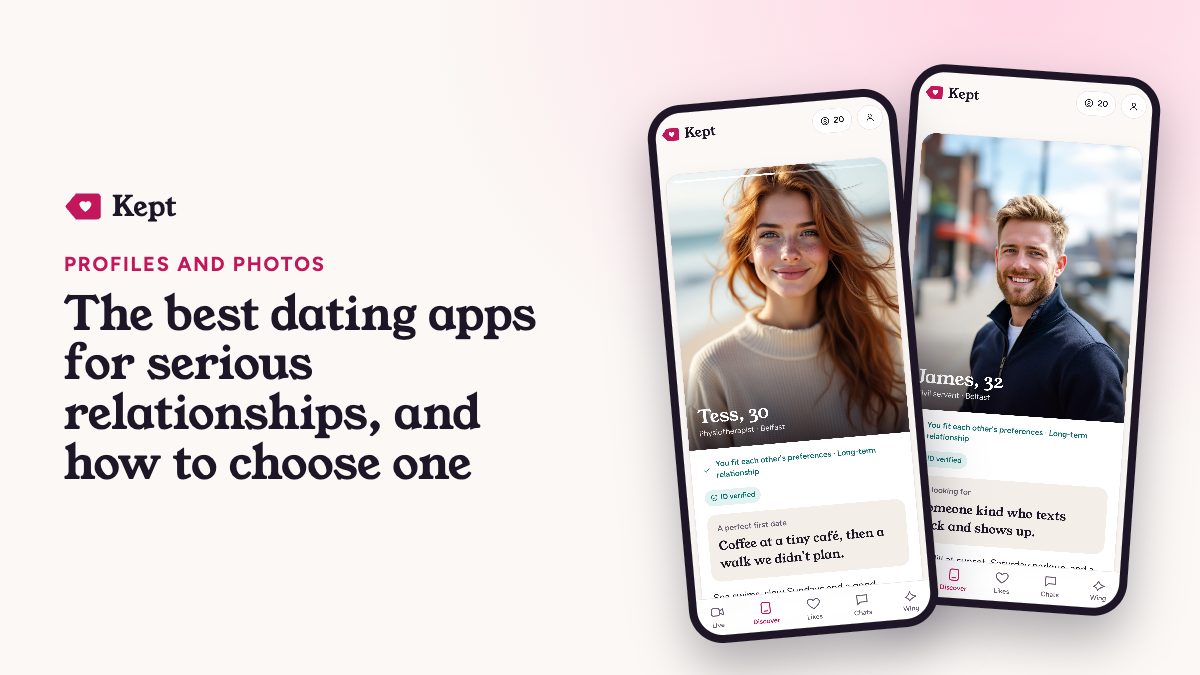
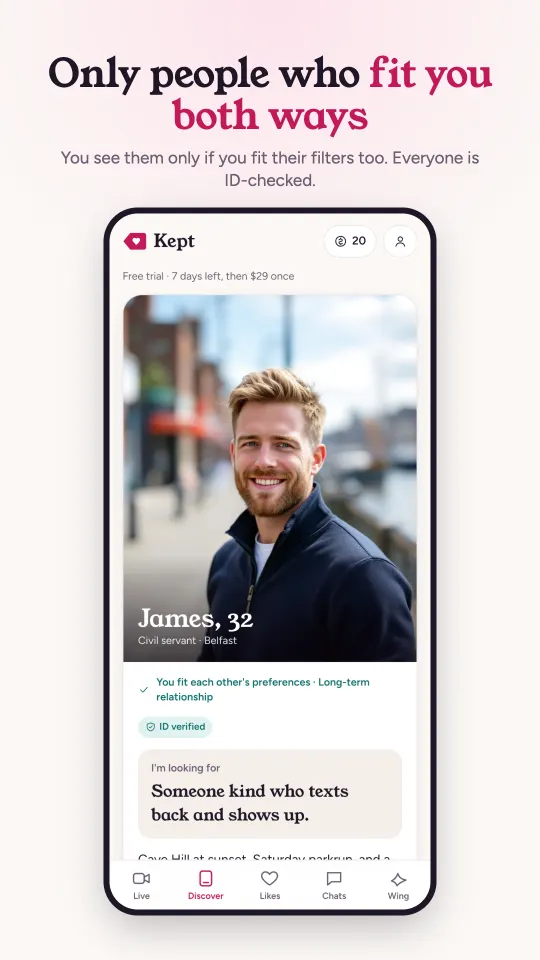
Kept is our app, so weigh this section with that in mind. It was built around the tests above: everyone passes an ID check before they can match, filters work both ways so you only see people who would also want to see you, and people looking for different things are not matched at all. You can have up to five open chats at a time, which keeps conversations focused, and first meets can happen on a video call that starts blurred until you both choose to reveal.
On price, it has a 7-day free trial and then one payment of $29 for life rather than a subscription. It runs on the web and on Android. It is newer and smaller than the apps above, so if you live somewhere rural or want a very wide pool, using it alongside another app is completely reasonable.
Questions to ask yourself before you download
The right app also depends on you. Be honest about how you like to date before you commit time or money.
- Do I prefer writing and reading longer profiles, or getting on a call quickly?
- Do I want lots of choice, or fewer, better-matched people?
- How much time a week can I genuinely give to this?
- Would I rather pay once, pay monthly or not pay at all?
- Which safety features would make me feel comfortable meeting a stranger?
How to use any app with serious intent
The app only gets you so far; how you use it matters more. Say what you want plainly in your profile, for example: 'Looking for a relationship, not a pen pal. Happy to start with a coffee.' Our dating profile bio examples have more lines you can adapt.
Open with something specific from their profile rather than 'hey' (see how to write a first message), and suggest a short call or a first meet within a week or two of good conversation. People who want the same thing usually say yes; people who keep stalling are telling you something.
Signs an app isn't working for you
Give any app a fair trial of a few weeks with a complete profile before you judge it. After that, it may be time to switch if you notice these patterns.
- Your matches rarely mention wanting anything long-term.
- Conversations die after two or three messages, again and again.
- You feel pushed to pay more just to be seen.
- You keep running into the warning signs in our guide to dating app red flags.
- Opening the app makes you tired rather than hopeful.
Questions people ask
Which dating app is best for finding a long-term partner?
Look for an app where intentions are clear, verification is required and conversations are paced rather than endless. The best choice is the one where people near you want the same thing you do, so try one or two with a complete profile before deciding.
Are paid dating apps better for serious relationships?
Paying can filter out some people who aren't committed, but price alone doesn't make an app serious. Check what the payment unlocks, whether it renews, and whether the app's design actually encourages people to meet.
Is Hinge or Bumble better for a relationship?
Both are used by people looking for relationships. Hinge suits people who like prompts to start conversations, while Bumble suits people who like its first-message approach, so choose the one whose style feels more natural to you.