 Kept
Red flags in a relationship and what to do about them
Red flags in a relationship are behaviours that suggest someone may be controlling, dishonest or unsafe: checking your phone, isolating you from friends, explosive jealousy, pressure about sex or money, and apologies that never lead to change. A single bad day isn't a red flag, but a pattern that leaves you anxious, smaller or afraid is. Trust that feeling and take it seriously.
Early red flags while you're still dating
In the first weeks, red flags often hide inside things that feel flattering. Intensity can look like passion. Jealousy can look like devotion. Slow down and look at what is actually happening. If you met online, our list of dating app red flags covers profile and chat warning signs in more detail.
- Love bombing: constant compliments, gifts and “I've never felt like this” within days, followed by pressure to commit fast.
- Pushing past small no's: you said you'd rather meet for coffee and they keep steering towards drinks at their place.
- Stories that keep changing: their job, age or reason for being single shifts each time it comes up.
- Every ex, friend and boss in their past was apparently the problem.
- Rudeness to others, such as snapping at waiting staff, then switching the charm back on for you.
- Weeks of chatting with constant excuses not to meet or video call.
Controlling behaviour
Control rarely starts with orders. It starts with small requests that sound reasonable, then grows. A good question to ask yourself is whether your world has got smaller since you met them.
- Checking your phone, demanding passwords or tracking your location “to keep you safe”.
- Making you feel guilty for seeing friends or family, or picking fights before you go out.
- Commenting on what you wear, eat or post until you change it to avoid an argument.
- Controlling money: taking your wages, demanding receipts or stopping you working.
- Making decisions for both of you without asking.
Red flags in how they handle conflict
Every couple argues. The red flag isn't disagreement; it's how they argue and what happens afterwards.
Gaslighting is one to know by name. It's when someone insists that things you remember clearly didn't happen, or that you're too sensitive to trust your own feelings. Over time you start checking your memory against theirs instead of trusting yourself. Writing things down privately, or talking them through with a friend, can help you see the pattern.
- The silent treatment used as punishment, sometimes for days.
- Shouting, slamming doors, throwing or breaking things, even if they never touch you.
- Apologies followed by the same behaviour, again and again.
- Blaming you for their reactions: “You made me lose my temper.”
- Using your insecurities to win an argument.
Red flags around sex, money and secrets
Some topics carry higher stakes, and pressure around them is a serious warning sign however loving the rest of the relationship feels.
- Pressure or guilt about sex, or ignoring a no or a change of mind.
- Asking to borrow money early on, especially with an urgent story attached. Never send money to someone you haven't met, and be wary even if you have.
- Hiding important things, such as another partner, debts or where they really live.
- Refusing to introduce you to anyone in their life after months together.
What to do if you notice red flags
Start by naming it to yourself. Write down what happened and how you felt. Patterns are easier to see on paper than in the moment.
If it's something small and early, such as vague plans or slow replies, you can raise it directly: “I like you, and I want to feel clear about where this is going. Can we talk about it?” How they respond tells you a lot. If it's controlling, frightening or involves pressure, you don't owe anyone a debate. You can end things by message, from a safe place, and block them.
Tell someone you trust what's going on. Controlling behaviour thrives on isolation, and an outside view helps you see clearly.
- If you feel unsafe with a partner, Refuge's National Domestic Abuse Helpline is free on 0808 2000 247.
- If you're in immediate danger, call the police on 999.
- If you're struggling to cope, Samaritans are there on 116 123.
Spotting red flags earlier when you date
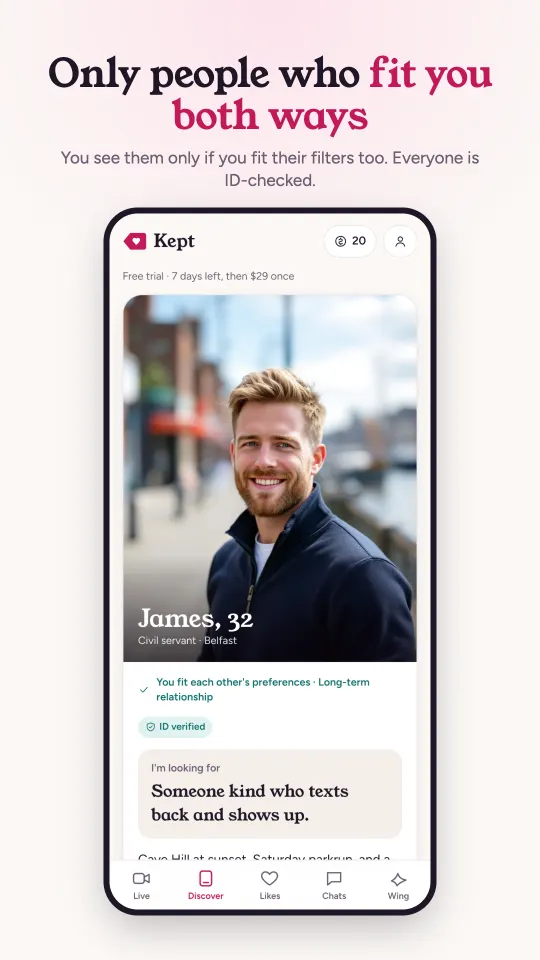
You can't screen out every bad actor, but you can make it harder for them. Meet in public for early dates, tell a friend where you're going, and keep chats on the app until you feel sure. Some apps build these checks in. On Kept, everyone passes an ID check before matching, and you can block or report someone from their profile, a chat or a live video call, with every report reviewed by a person.
It also helps to know what good looks like. Our guide to green flags in a relationship is the other half of this list, and first date safety tips covers the practical side of meeting someone new.
Questions people ask
What counts as a red flag in a relationship?
Behaviour that suggests control, dishonesty or disrespect, especially when it forms a pattern. Examples include jealousy that limits who you see, pressure about sex or money, and apologies that never lead to change.
Is jealousy always a red flag?
A flash of jealousy is human. It becomes a red flag when it turns into checking up on you, accusing you or limiting your friendships.
Can someone change their red flags?
People can change, but only when they recognise the behaviour and act on it consistently, often with outside help. Your safety comes first, and you don't have to wait around to find out.