 Kept
Love languages: what they are and how to use them
Love languages are five common ways people give and receive affection: words of affirmation, quality time, receiving gifts, acts of service and physical touch. The idea is that most of us feel loved most strongly through one or two of them. Knowing yours, and your partner's, can help you show care in a way that actually lands.
Where the idea comes from
The idea comes from a 1992 book, The Five Love Languages, by the American counsellor Gary Chapman. It has since become one of the most widely discussed relationship ideas, and many people use it as a shorthand for how they like to feel cared for.
It's a helpful framework rather than a scientific rule. Most people value all five to some degree, and preferences can shift over time. Treat it as a conversation starter, not a test with a fixed answer.
The five love languages, with examples
Each love language describes a different way of showing care. Here's what each can look like day to day.
- Words of affirmation: saying what you appreciate. “I love how you made everyone laugh tonight.” A good-luck text before a big meeting.
- Quality time: undivided attention. A walk without phones, cooking together, a proper catch-up at the end of the day.
- Receiving gifts: thoughtful tokens, not expensive ones. Picking up their favourite snack, a book you think they'd love, a postcard from a trip.
- Acts of service: doing something helpful. Making them tea when they're tired, sorting a chore they hate, picking them up from the station in the rain.
- Physical touch: affectionate contact, always welcome and consensual. Holding hands, a hug when they get home, sitting close on the sofa.
How to work out your love language
You don't need a quiz, though there are plenty online. Thinking about a few questions will usually point you in the right direction.
- What do you most often do for people you care about? Many of us give love the way we'd like to receive it.
- What do you complain about most in relationships? Missing time together, a lack of help or not hearing kind words are clues.
- Think of a moment you felt really cared for. What was the other person doing?
- What hurts you most when it's missing?
Using love languages in early dating
You don't need to ask someone their love language on a first date, though it can be a fun question later on. Instead, pay attention. Notice what they light up about, what they do for friends and what they mention appreciating. Our deep conversation starters include questions that bring this out naturally.
It's also a useful lens for reading interest early on. Someone whose language is acts of service might not send long, gushing texts, but they'll offer to walk you to the station or remember you were feeling unwell. Someone who values quality time may show interest by making plans rather than messaging constantly.
Try a light question once you're a few dates in: “What's something small someone could do that would make your whole week?” The answer often tells you more than asking about love languages directly.
When your love languages are different
Different love languages are very common and don't mean you're incompatible. The key is to talk about it and make a small effort in each other's direction.
For example, if you show love through acts of service and your partner needs words of affirmation, you might be quietly doing loads for them while they wonder whether you care. Saying “I did the shopping because I know you've had a rough week, and I love you” covers both.
- Tell each other what makes you feel most loved, with specific examples.
- Agree on one or two small habits each that the other would appreciate.
- Notice and thank each other when you try, even if it doesn't come naturally.
- Check in every so often, because what you need can change with life's pressures.
A word of caution
Love languages are a tool for understanding, not a reason to excuse poor behaviour. “My love language is gifts” doesn't make it fair to expect expensive presents, and “My love language is physical touch” never overrides consent. Care looks different for everyone, but respect is always the baseline.
If someone uses kindness in one area to make up for being unkind in others, such as big gifts after hurtful arguments, that's a pattern to notice. Our guide to green flags in a relationship describes what steady, respectful care looks like.
Quality time starts with a plan
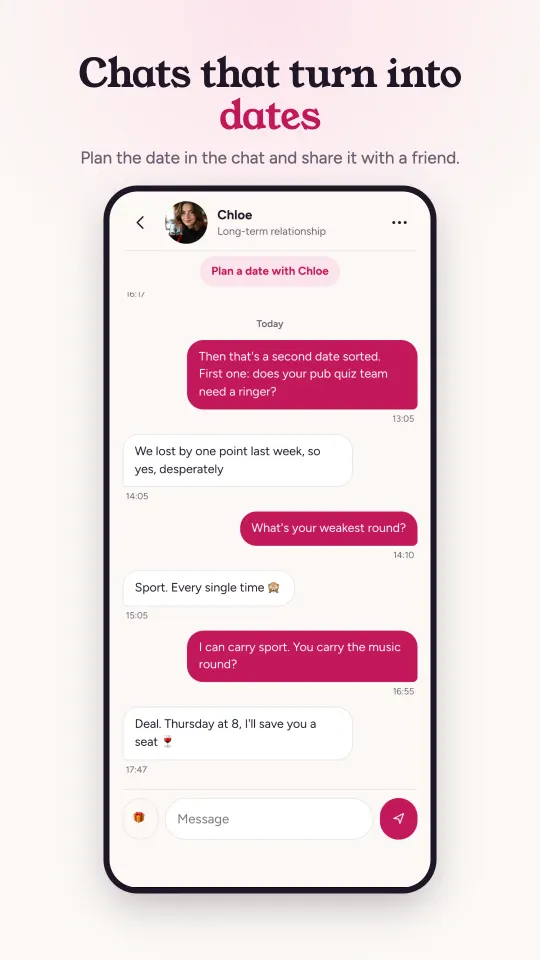
Whatever your love language, good dates help you discover it. If you're looking for inspiration, our date night ideas at home suit almost every language. On Kept, you can plan the date in the chat and share the plan with a friend in one tap.
Questions people ask
What are the five love languages?
Words of affirmation, quality time, receiving gifts, acts of service and physical touch.
Can you have more than one love language?
Yes. Most people value several, with one or two that matter most. Your preferences can also change over time.
Do couples need the same love language?
No. What matters is understanding each other's and making a small, regular effort to show care in a way the other person feels.