 Kept
Dating in your 30s: how to date with intention
Dating in your 30s tends to be more focused: you usually know yourself better, you have less patience for mixed signals and you may have clearer goals around commitment, children or where you want to live. The best approach is to be upfront about what you want, look for consistency over chemistry alone and talk about the big topics earlier than you might have in your 20s.
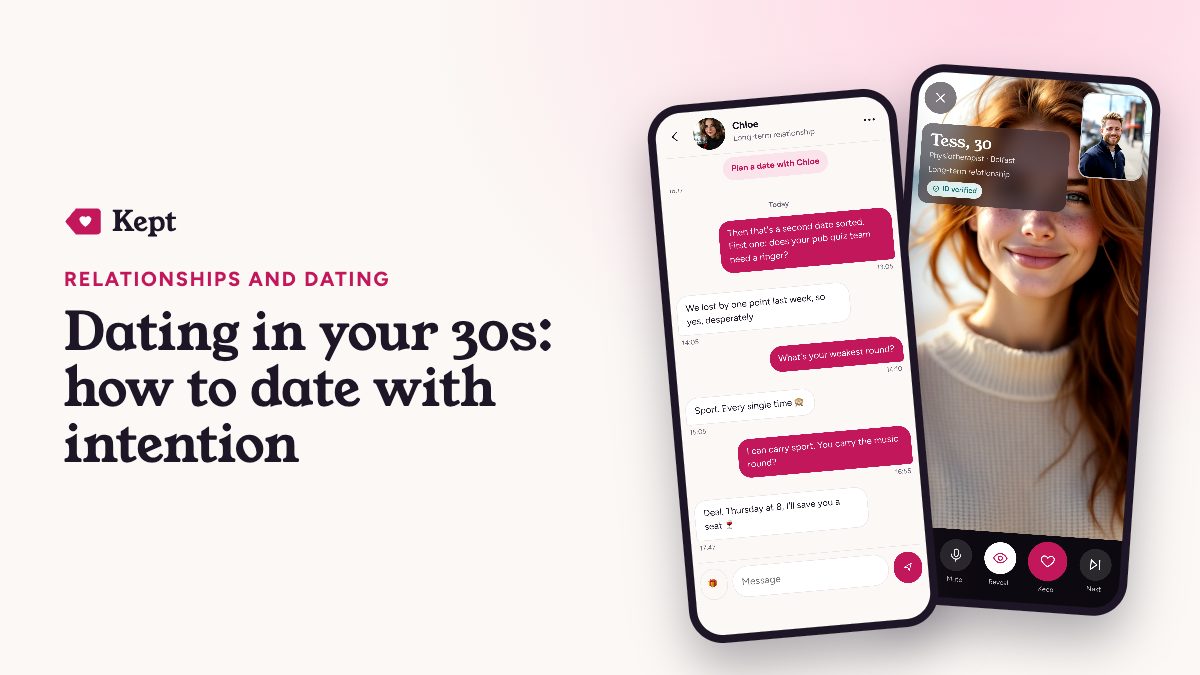
What changes in your 30s
By your 30s, many people have a clearer sense of their values, routines and deal-breakers. You might be more settled in work, own or rent your own place, and have firm friendships. That makes it easier to spot who fits into your life and who doesn't.
At the same time, the dating pool can feel different. Some people have been married or had long relationships, some have children, and many are busier. People are often more direct, which is refreshing, but you may also feel more pressure around timing. Recognising that pressure helps you stop it from driving your choices.
Be clear about what you're looking for
Being honest about your intentions is attractive, not off-putting. Saying “I'm looking for a long-term relationship” in your profile or early chats filters out people who want something else and saves everyone time. If you're not sure about something big, like children, say that too.
- Profile line: “Looking for something long-term with someone kind, curious and good at making plans.”
- Early chat: “Just so you know where I am, I'm dating with a relationship in mind. What about you?”
- Early chat: “I'm open on kids but it's not a must. How do you feel?”
Talking about big topics early
In your 30s it's reasonable to talk about the future sooner. You don't need to interview someone on a first date, but by the third or fourth date, gentle questions about values and plans are normal. Frame them with curiosity, not pressure. Our list of questions to ask before a relationship has more ideas.
- “Where do you see yourself living in a few years?”
- “How do you feel about having children?”
- “What does a good weekend look like for you?”
- “What did you learn from your last relationship?”
- “How important is family to you, and how often do you see yours?”

Dating someone with a past
By now, most people have history: long relationships, perhaps a divorce or children. That's a strength, not baggage. It usually means they know what works and what doesn't. The question isn't whether they have a past, but whether they've learned from it and are ready for something new.
Pay attention to how they talk about their exes. Calm and fair is a good sign. Bitter or still very raw may mean they need more time. If you're the one with a complicated past, our guide to dating after divorce may help.
Making dating fit a busy life
- Keep first dates short and local. A coffee or a walk after work is easier to fit in than a whole evening.
- Batch your app time. Ten or fifteen minutes a day is plenty.
- Don't let chats drag on for weeks. Suggest meeting or a video call within a week or two.
- Use video for a quick first meet if your diary is full. It saves journeys for people you don't click with.
- Protect your weekends for people you're excited about.
- Say no to dates you're lukewarm about. Your time is valuable.
- Check in with yourself each month. If dating feels like a chore, take a short break and come back fresh.
Chemistry and consistency
In your 20s you may have chased intense chemistry. In your 30s you might notice that calm, steady interest is more attractive. That doesn't mean settling. It means valuing someone who replies when they say they will, makes plans and shows up as the same person each time.
Give promising people a few dates before deciding. A first date can be awkward even when someone is a great match, and a second date often tells you far more.
Ask yourself after each date whether you felt respected, relaxed and interested, rather than only whether there were fireworks. Those quieter feelings are usually a better guide to what a relationship would feel like six months in.
Choose tools that respect your time
Dating apps that make intentions and preferences clear save a lot of wasted evenings. On Kept, filters work in both directions and people looking for different things aren't matched, so you're not spending a Thursday night finding out your date doesn't want a relationship. A short blurred video intro can also tell you within minutes whether there's any spark, which suits a busy diary. Our video dating tips explain how to make the most of it.
Questions people ask
Is it harder to date in your 30s?
It can feel different rather than harder. People are often clearer about what they want, which can make dating more efficient, even if the pool feels smaller.
When should I bring up wanting children?
It's reasonable to mention it in your profile or within the first few dates. Being honest early helps you both avoid investing in something that doesn't fit.
Should I date someone with kids in my 30s?
Many people do and are very happy. Be honest with yourself about whether you're comfortable with the realities of their schedule and family life.